Every product category has a short list of questions that actually decide the purchase. Not “what is your return policy”, but “will this grinder handle oily espresso beans”, “does this jacket work for cycling in the rain”, “can I run this compressor on a normal household socket”. Shoppers ask them in their own words, and increasingly they ask an AI assistant instead of your support inbox.
A Buying Intelligence Question, BIQ for short, is Klariton's format for exactly these questions: a curated question-and-answer pair built for the moment a buyer is deciding, backed by the seller's own material, and managed like a product rather than dashed off like a blog post.
What does BIQ stand for?
BIQ stands for Buying Intelligence Question. Each word carries weight:
- Buying means the question sits at a decision point. A BIQ is not general content marketing; it exists because someone is about to choose between buying and not buying, or between your product and another one.
- Intelligence means the answer is source-backed. It is grounded in the seller's own material: product data, spec sheets, manuals, policies. Claims trace back to sources instead of being generated freely by a model at chat time.
- Question means it is framed the way real buyers ask, not the way a category manager would label it. “Is this machine loud?” beats “Acoustic emission specifications”.
The important distinction: a BIQ is a curated asset with provenance, not an on-the-fly AI response. A model may help draft it, but what gets published has been checked against your material and approved by a person.
How is a BIQ different from a normal FAQ?
On the surface both are questions with answers. The difference is everything around the answer: where it comes from, how it is verified, and what happens to it after publishing.
| Dimension | Classic FAQ | BIQ |
|---|---|---|
| Origin | Written ad hoc, often copied from a competitor's FAQ page | Curated from real buying questions in the seller's category |
| Evidence | Unstated; nobody knows which claim rests on what | Every claim is backed by the seller's material and product data |
| Lifecycle | Published once, then forgotten | Draft, review, published, with ongoing checks after go-live |
| Quality control | Manual, occasional, usually triggered by a complaint | Safe Guard scans continuously; a human approves every change |
| Confidence | Implicit and invisible | Explicit confidence tiers per answer |
| Distribution | One FAQ page | Website embed, advisor conversations, AI-readable structured data |
Where does a BIQ answer come from?
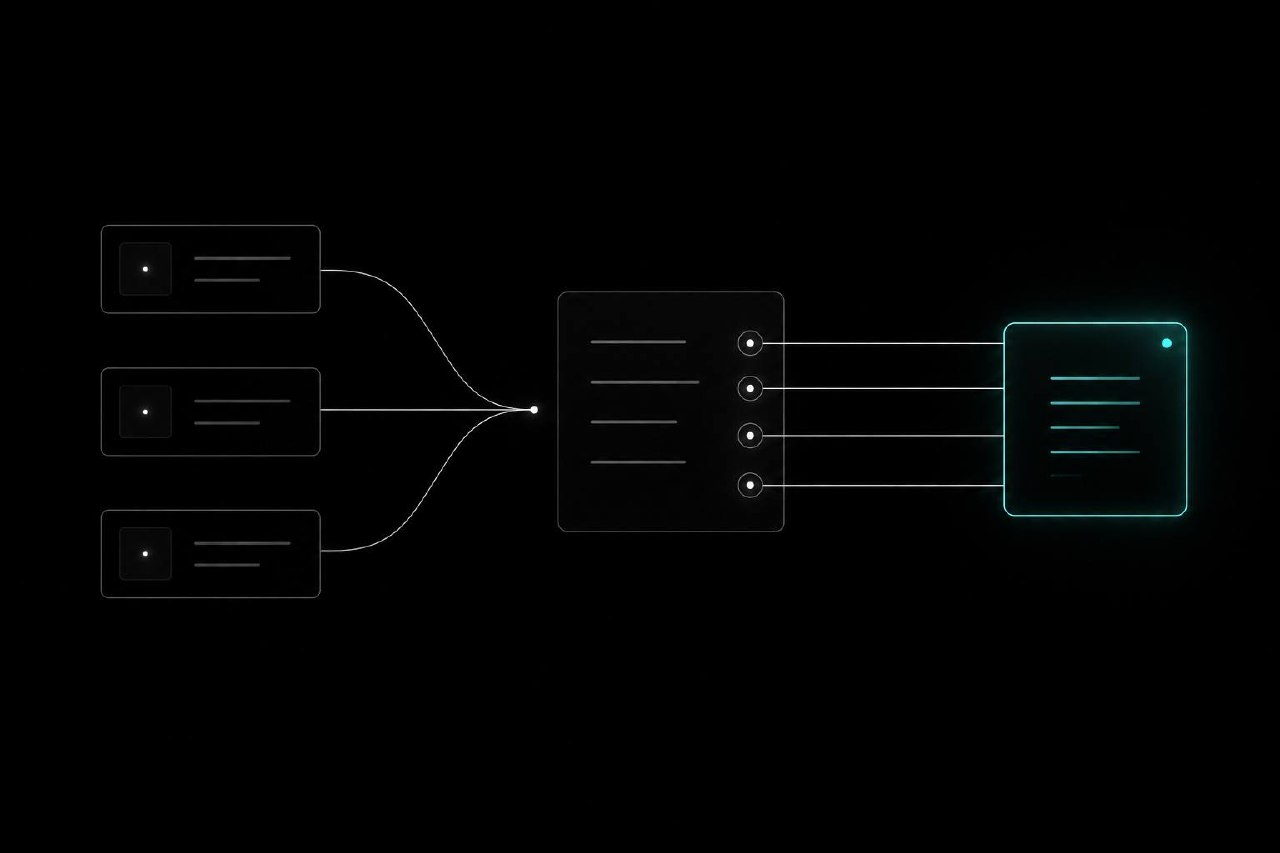
The raw material is yours: product data, technical documentation, care instructions, warranty terms, policies. A BIQ answer is composed from these sources, and each factual claim keeps its link to the material it came from. That has two useful consequences.
First, gaps become visible. If your material simply does not say whether the compressor runs on a household socket, the honest output is not a guess; it is a flagged material gap that tells you what documentation to add. Second, answers carry confidence tiers. An answer fully supported by current material sits in a high-confidence tier. An answer resting on thinner or older sources is marked accordingly and routed to review instead of being presented as settled fact.
What does the BIQ lifecycle look like?
A BIQ moves through three explicit states:
- Draft. The question is captured, an answer is composed from your material, and sources are attached. Nothing is public yet.
- Review. A person checks the claims against the sources, adjusts tone and framing, and decides whether the answer is ready. This is a human gate, not a formality.
- Published. The answer is live on your touchpoints, and it enters continuous monitoring.
Publishing is deliberately not the end of the process. Products change, stock changes, regulations change, and an answer that was correct in March can be wrong in July.
How does Safe Guard keep published answers accurate?
This is where a BIQ differs most from static content. Safe Guard continuously checks published answers against your material, your product data and your style rules. It flags drift between answer and source, contradictions, unsupported claims and stale answers whose underlying material has changed.
Crucially, Safe Guard does not silently rewrite anything. Every finding goes into a controlled review, and a human decides every change before it reaches a buyer. The system's job is to notice; your job is to decide. That division of labor is what makes it safe to put curated answers in front of customers and AI assistants at scale.
Where do BIQs actually show up?
BIQs render directly on product and category pages, answering the deciding questions right where the decision happens.
When a shopper asks in their own words, the advisor draws on published BIQs first, so conversational answers stay source-backed.
BIQs are exposed as structured, machine-readable data, so answer engines and shopping agents can cite your answers instead of guessing.
That third touchpoint matters more every quarter. As AI assistants and agents take over more of the product research, sellers whose answers are structured and source-backed are the ones that get quoted. If that shift interests you, read our piece on agentic commerce.
The short version: a BIQ treats buying questions as an asset class. Curated, evidenced, reviewed, monitored. Not because process is fun, but because the answers that close sales deserve the same rigor as the products themselves.