Agentic commerce: when your next customer is an AI agent
Shoppers increasingly delegate research, comparison and even purchasing to AI assistants. Those assistants read your shop very differently from a human, and most shops are invisible to them. Here is what changes, and what to do about it.

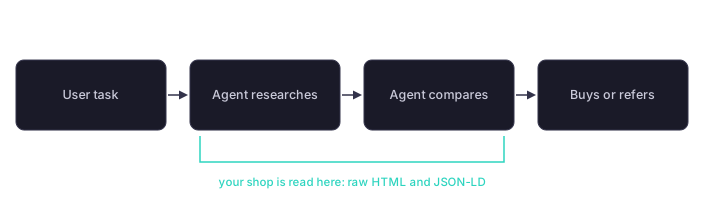
For twenty years, e-commerce optimisation meant optimising for two audiences: human visitors and Google's crawler. A third audience has arrived. AI assistants and answer engines now research products, compare options and recommend sellers on behalf of their users, and agent-driven checkouts are moving from demo to reality. When that agent picks three coffee grinders to show its user, the shops it could not read were never in the running.
What is agentic commerce?
Agentic commerce is the shift from people browsing shops to software agents acting on a person's behalf: researching, shortlisting, comparing and increasingly transacting. The spectrum runs from an answer engine citing two shops in response to “best waterproof cycling jacket under 200 euro” to an assistant that completes the purchase once its user approves. The market is early and moving; nobody can honestly tell you what percentage of purchases will be agent-mediated next year. What is already observable: assistants shape shortlists today, and a shortlist you are not on is a sale you never see.
Why can't AI agents read most webshops?
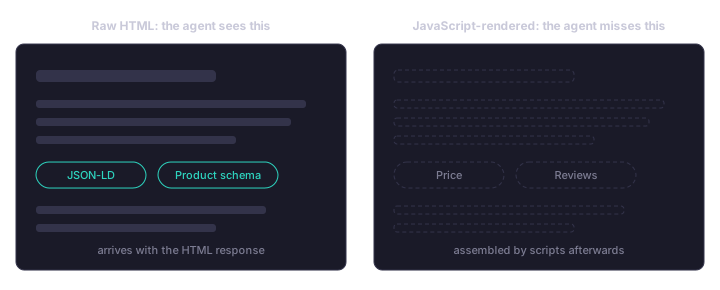
Because most modern shops render in the browser. Product data arrives as JavaScript, and the visible page is assembled client-side. Human browsers execute that JavaScript; many AI crawlers and agents do not. They fetch the raw HTML, and if the raw HTML is an empty application shell, that is what they learn about your shop: nothing.
This is the single most common reason shops score poorly on agent readability. It is not a content problem; the content exists. It is a delivery problem: the content never reaches the reader that matters.
What do AI agents actually need from your shop?
Agents want what careful humans want, in machine form: facts, structured and stable.
Server-side rendered content. The information must be in the HTML response itself, not assembled by scripts afterwards.
Structured data. Schema.org JSON-LD for products, offers, FAQs and the organisation, so an agent does not have to guess prices and availability out of prose.
Answers, not just attributes. The buying questions that decide purchases, in a structured, citable form. This is exactly what BIQs are for.
Stable, crawlable URLs. An agent that cannot address a page cannot cite it or send a buyer to it.
What are llms.txt and agents.md?
Two young conventions try to give AI systems a front door. llms.txt is a plain-text file at your domain root that points language models to your most important, machine-friendly content, a sitemap for models rather than crawl bots. agents.md goes a step further and describes how automated agents should interact with your site. Neither is a magic ranking switch, and both are still settling as standards. But they are cheap to publish, they signal that your machine-readable content is intentional rather than accidental, and the shops experimenting with them now are the ones learning fastest.
How do you become agent-readable without replatforming?
The uncomfortable answer would be “rebuild your frontend with server-side rendering”. Fortunately there are lighter paths:
Klariton supports the second and third path directly: a crawlable agent subdomain fed by your published answers, or the Schema Export API, which returns your content as structured entities you can drop into any page. The integration is around ten lines of code, the Schema.org entity type can be set per entry, and the details live in the Schema Export docs.
How do you measure whether agents actually see you?
Optimising for an invisible audience without measurement is guesswork, so instrument two things. First, bot read tracking: which AI crawlers and agents fetch your content, what they read, and how often. That turns “are agents visiting?” from a hunch into a log. Second, purchase attribution: when a buyer arrives from an assistant's recommendation or an agent completes a checkout, record it. Together they connect the machine audience to revenue, which is the only argument that survives a budget meeting.

The strategic point is simple: agent readability compounds. Structured, source-backed, server-rendered answers serve human visitors, search engines and AI agents from a single effort. The shops that treat the machine audience as a first-class reader now will be the ones agents quote by default later.
Ask your own question about this article.
Grounded in the article, cited rather than invented. Safe Guard keeps the answer current when the source changes.
Recommendation and shortlisting are already routine: assistants answer product questions and point users to sellers every day. Fully automated purchasing exists but is earlier. The practical takeaway is that visibility to agents already influences sales, whoever ultimately clicks the buy button.
No, it extends it. Classic SEO targets ranked lists of links; agent readability targets being understood and cited by systems that answer directly. The foundations overlap: clean structure, real content, stable URLs. Structured data and server-side rendering serve both audiences at once.
An API that returns your curated content as ready-made Schema.org structured data. Integration is around ten lines of code, and you control the entity type per entry. Documentation is at docs.klariton.com/schema-export.
Through bot read tracking: logging which AI crawlers and agents fetch your content and what they read. Combined with purchase attribution for assistant-referred buyers, you can see both the reach and the revenue side of the machine audience.
How visible is your brand to AI?
The free AI visibility check shows you in under a minute how AI assistants see your shop today.