Your headless CMS makes you structured. Not visible to AI.
Why a clean CMS setup isn’t AI visibility yet, and how to ship grounded, citable answer touchpoints straight from your CMS, without the auto-FAQ trap.
You have modeled your content cleanly in your CMS: products, categories, articles, all structured, all reusable. And yet your brand barely shows up in ChatGPT, Perplexity or Gemini, or a competitor gets recommended instead. That is not a contradiction. A headless CMS organizes your knowledge. Whether an AI reads and recommends it is a second, separate question.
Structure is the baseline, not the answer
Clean, machine-readable markup is the foundation: it helps AI crawlers reliably pick up your content in the first place. But being read is not being recommended. The engines don’t cite the best-tagged page, they cite the one that best answers a specific question, with a citation. Cited is not recommended, and structure alone only gets you to the threshold.
The auto-FAQ trap
Many CMSs now offer a button: generate FAQs. The result is usually generic filler that no one checked, often close to what the model already knows. Answers like that create no visibility, and at worst they hurt, because they assert something false about your product. Why generated FAQs don’t save your AI visibility is not a theoretical risk, it is the most common misstep.
What AI actually cites
What gets cited are answers to real buying questions that come from your own material and carry a source. Not “What is product X?”, but “Which variant fits my use case, and why?”. Most sites are missing exactly these answers, even though the knowledge already exists in the company, spread across spec sheets, support threads and people’s heads. It just isn’t stored anywhere as a clear, cited answer an engine could quote.
Touchpoints straight from your CMS
This is where the Klariton integration for your CMS comes in. Instead of leaving your CMS, you place Klariton touchpoints where you already work. Three types cover most of the buying decision:
FAQ: cited answers to recurring buying questions, quotable for the AI engines.
Buying-intelligence answers (BIQ): the questions that decide the purchase, grounded in your product data.
Advisor: conversational guidance on the product, drawing on the same material.
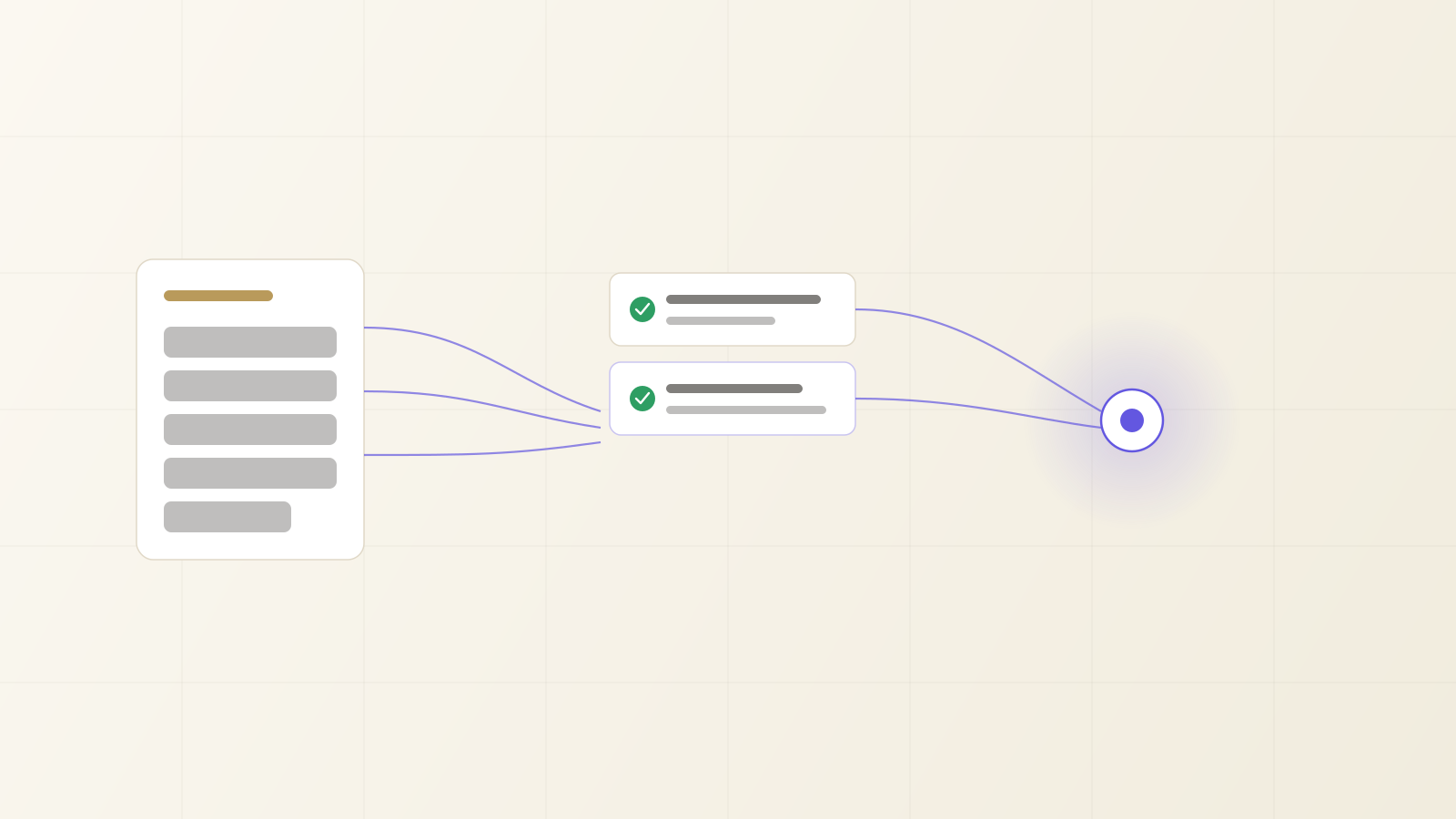
A touchpoint references your existing CMS entries as its source. The answer is grounded in that material, not invented. Your editors stay in their familiar tool, and your CMS stays the single source of truth.
A static FAQ goes stale. A touchpoint doesn’t.
An FAQ you write once is wrong the moment the next spec sheet changes, and nobody notices. This is exactly where a touchpoint parts ways with a generated block of text: because the answer is grounded in your current material, it carries changes with it. And Safe Guard continuously monitors published answers against your material, spots weak or outdated statements and flags them before a customer sees them. Your FAQ stays as current as your source, not as old as the day you wrote it.
Cited, checked, approved
Every answer carries its source and passes a review gate: nothing is published unchecked, you approve it. AI calls run EU-hosted, and personal data is pseudonymized before every call. No autonomous publishing, no loss of control over what is said in your brand’s name. That is the difference between an answer system and a chatbot that improvises.
From the page to measurable impact
Because the touchpoints come from your material, you can measure the chain a plain CMS never sees: does an engine read and cite the answer? Does the citation lead to a click? Does that turn into a purchase? This read-to-revenue view closes the loop between your content and revenue, instead of stopping at “published”.
Your CMS stays the source. Klariton makes it the answer.
A headless CMS is built to organize knowledge and deliver it everywhere. It is not built to answer buying questions inside AI answers. Klariton sits on exactly that: the material already in your CMS becomes cited answers that show up where your customers ask. If you want to know where you stand today, the free AI visibility check shows you in under a minute whether the engines recommend you, or the competitor.
Ask your own question about this article.
Grounded in the article, cited rather than invented. Safe Guard keeps the answer current when the source changes.
It is the foundation for AI crawlers to read you reliably at all. But being read is not being recommended. Recommendation comes from cited answers to real buying questions, not from tags alone.
Auto-FAQs produce unchecked, generic text that often just repeats what the model already knows. Klariton answers are grounded in your own material, carry a source, and are checked before release.
No. The integration builds on your existing content: a touchpoint references existing CMS entries as its source. Your editors keep working in their familiar tool.
EU-hosted. Personal data is pseudonymized before every AI call, and nothing is published without your approval.
How visible is your brand to AI?
The free AI visibility check shows you in under a minute how AI assistants see your shop today.