AI search queries are three times as long. The advantage goes to whoever leads with the answer.
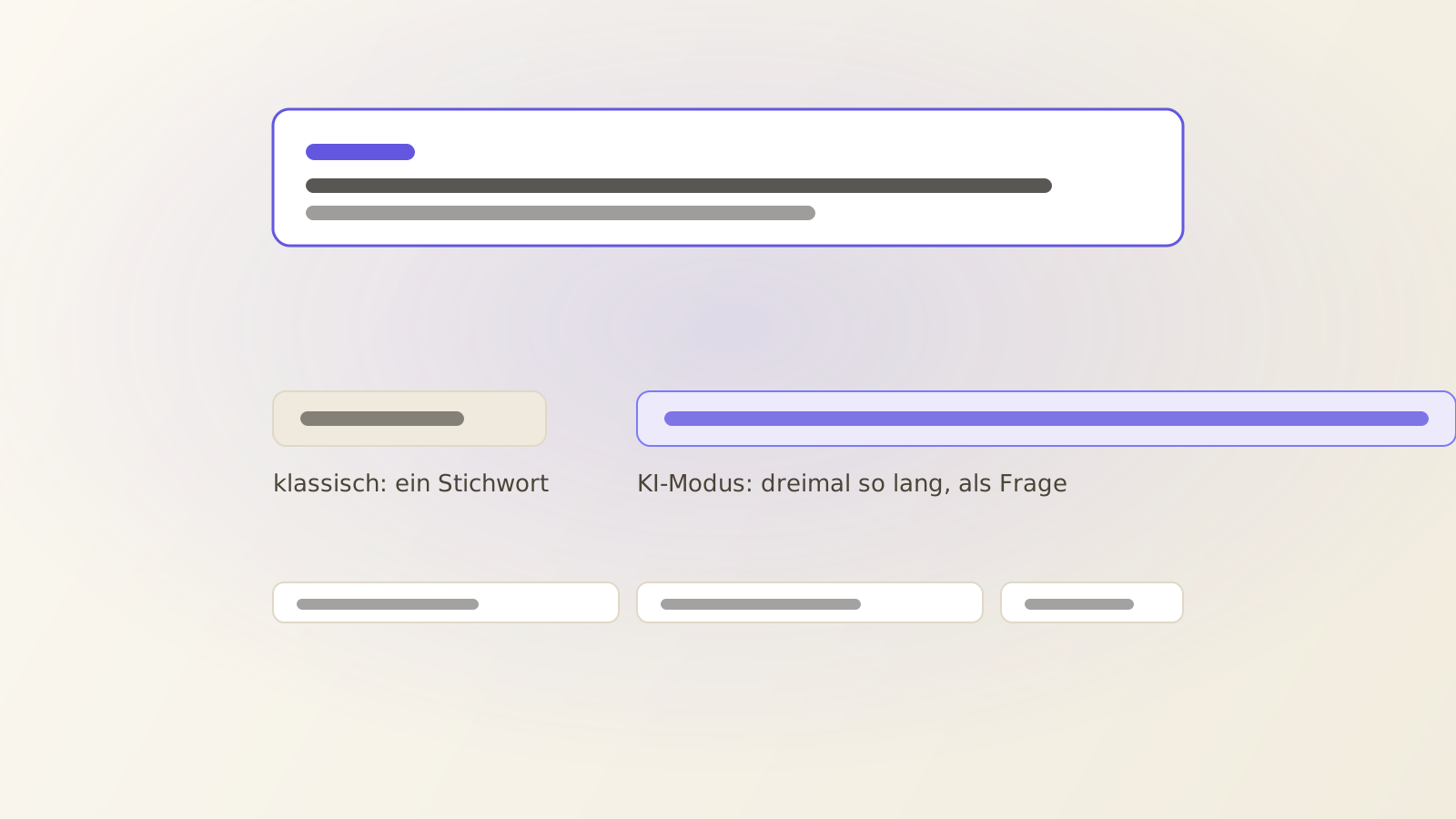
Google has measured how search is changing in AI Mode: the questions are on average three times as long as classic search terms, they arrive as conversations rather than single words, and increasingly with an image or a voice. Anyone still building pages for keywords will not be read here. Anyone who knows the question and starts with the answer will be.
On 19 August 2026, Google published usage figures on the AI Mode of Search, in a post by Shivani Mohan, Vice President for Data Science and UXR. The numbers are interesting, but the real story is not in any single figure, it is in what they say together about behavior.
1. What Google measured
The evidence-backed figures from the post, listed plainly:
The average AI Mode query is three times as long as a classic search query.
AI Mode has surpassed one billion monthly active users globally.
The number of queries has more than doubled every quarter since launch.
More than one in six searches in the U.S. now use voice or images.
Image searches are growing over 40 percent month over month.
Planning queries have grown 80 percent faster than the average over six months, brainstorming queries 30 percent faster.
Openings such as "where to buy", "where should I" and "ideas for" are growing in particular.
This is no longer a fringe effect. At a billion users and a doubling every quarter, it describes the direction a substantial part of searching is moving in.
2. Why longer questions change the rules
A classic search was a keyword and a list of blue links. You typed "espresso machine test", got ten pages, clicked, read, compared for yourself. The work sat with the human, the page only had to be found.
An AI Mode query is a full sentence with conditions: "Which espresso machine under 500 euros is good for a beginner who has little space and barely wants to descale." Nobody expects ten links to that, they expect an answer. And the system builds that answer from what it finds on the pages it is allowed to read and can understand.
That shifts what matters. No longer whether your keyword is on the page, but whether your page answers the actual question, clearly enough that a machine can pull the answer out and attribute it.
3. Lead with the answer
The practical advice that follows from these numbers is old and still rarely followed: begin with the answer, not with the run-up.
Newspapers learned this in the late 19th century, when transmission by telegraph was expensive and the most important thing had to come first. The same logic now applies to machines that evaluate a page in seconds. Concretely:
The core statement is in the first sentence, not after three paragraphs of introduction.
The openings are dense with facts: concrete names, numbers, places, dates. A "high quality and popular" helps no machine, a "150 grams, dishwasher-safe, in the range since 2019" does.
The follow-up questions are answered too. Whoever asks about the beginner espresso machine next asks about cleaning, warranty and accessories. If that is on the same page, you remain the source for the whole chain.
The structure is machine-readable: short paragraphs, lists, clean product markup.
This is not a matter of style. It decides whether your page is even a candidate as an answer in a longer, conversational query.
4. What this has to do with Klariton
This is exactly where we come in, and we deliberately claim no more than is true. Klariton turns your evidence-backed company knowledge into direct answers to the questions your customers actually ask. Owned Intelligence pulls the buying-decision questions and the facts that go with them out of your own material. Buying Answers casts them into answers that begin with the outcome. Safe Guard holds those answers against your product data, so nothing is claimed that your material does not support.
What we do not promise: that a particular AI will recommend you tomorrow. That is the provider's call, not ours. What we deliver is the work beforehand, which holds regardless: know the question, back the answer, and write it so that both human and machine find it at once.
5. What to do now, concretely
Without us, immediately actionable:
Take your five most important pages and check whether the first sentence answers the core question. If not, rewrite it.
Replace vague adjectives with evidence-backed facts.
Collect the ten most common customer questions and answer them where the buying decision is made, not in a remote FAQ.
Check whether your product pages carry structured data, so a machine can reliably attribute price, offer and provider.
The rest is practice. Users have already changed the way they ask. The advantage lies with whoever leads with the answer.
Sources
Ask your question about Klariton.
Grounded in Klariton’s own knowledge, cited rather than invented.
Klariton is an Answer Engine Optimization platform. It adds to your existing shop or website without replacing anything or migrating data. Your own knowledge becomes verified, source-based answers (BIQs) that AI assistants and your visitors use directly.
Product copy, FAQs, spec sheets, your CMS or shop catalog. Klariton processes your material read-only and turns it into cited answers. Your data is never used for model training.
All AI calls run EU-hosted. Personal data is pseudonymized before every call. Klariton reads your sources read-only and stores no plain-text customer data.
Every answer is source-backed and passes a review gate. Nothing is published unchecked. Safe Guard continuously watches published answers against your material and flags outdated or weak claims.
No. Klariton integrates with your existing site, with no platform switch or migration. One embed is enough, and your CMS stays the source of truth.
Plans scale with touchpoints and answer volume. The AI visibility check is free and needs no sign-up. For everything else, just talk to us.
How visible is your brand to AI?
The free AI visibility check shows you in under a minute how AI assistants see your shop today.